Why Your Homestay Is Losing 30% of Revenue to OTAs (And How to Stop It)
Key Takeaways: To truly reduce OTA dependence homestay owners need more than a listing—they need a system. Platforms like Airbnb and Booking.com can quietly eat up 15–30% of your revenue through commissions, discounting, paid visibility, and pricing pressure. The way out is a direct booking engine that actually converts: clear positioning, quick responses, strong trust signals, and a repeatable way to attract and retain guests.
Most homestay owners don’t wake up and decide to give away 30% of their revenue. It creeps in. A commission here, a Genius discount there, a quick promo to stay visible, a few underpriced weekends because cheaper listings get pushed up. By the end of the month, your calendar looks great—but your earnings tell a different story.
This isn’t about ditching OTAs completely. They’re useful. The issue starts when they quietly become your entire business model.
The quick answer: how to reduce OTA dependence for a homestay
The most effective way to reduce OTA dependence homestay operators deal with is to shift from “just being listed” to building a direct booking funnel. That means capturing demand (Google, Instagram, referrals), guiding it into a fast conversion path (WhatsApp + your website), and turning guests into repeat customers (email or CRM). OTAs should bring you discovery—not drain your profits.
Where the “30% loss” really comes from (it’s not only commission)
When someone says “OTAs take 15%,” they’re usually thinking about the visible commission. In reality, the cost stacks up. Pricing pressure, discounts, and policy compromises push the real number much higher—often closer to 25–35%.
| Revenue leak | What it looks like in real life | Typical impact |
|---|---|---|
| OTA commission | Airbnb host fee, Booking.com commission | 10–20% |
| Visibility “tax” | Genius / Preferred, promotions, mobile-only rates to rank | 5–15% |
| Rate compression | Lowering prices because competitors discount (and algorithms reward it) | 5–20% off ADR (average daily rate) |
| Policy pressure | More flexible cancellations than you’d normally allow | Higher cancellations + gaps |
| Guest relationship loss | No email list, no remarketing, no repeat booking system | Long-term compounding loss |
Operator reality: OTAs may bring you the booking—but they rarely give you the relationship. That’s why one homestay can stay busy yet struggle financially, while another with even 30–40% direct bookings feels far more stable.
The four reasons homestays get stuck in OTA dependence
1) OTAs feel like demand. Direct bookings feel like work.
OTAs offer predictability: stay active, get bookings. Direct bookings feel like effort—content, visibility, replies, follow-ups. So they get pushed aside.
But the trade-off is simple: you either pay in commission or invest in systems. Over time, systems cost less.
2) Your “direct” offer isn’t compelling enough
Many homestay websites look nice but don’t convert. Pretty photos, vague copy, and a contact number aren’t enough.
Direct bookings win when they feel clear, fast, safe, and personal—not just “cheaper.”
3) You’re too slow to respond
Most guests don’t spend days deciding. They compare a few options and book while interest is high.
Citable insight: Responding within 5–10 minutes can significantly improve conversions, because attention drops fast once they move on.
If your replies take hours, OTAs will keep winning—even if your property is better.
4) There’s no remarketing loop
OTAs follow guests everywhere online. Most homestays don’t. If someone checks your page and leaves, they’re gone unless you’ve built a loop—email capture, WhatsApp opt-ins, retargeting ads, and strong review signals.
A practical revenue math check (so you feel the urgency)
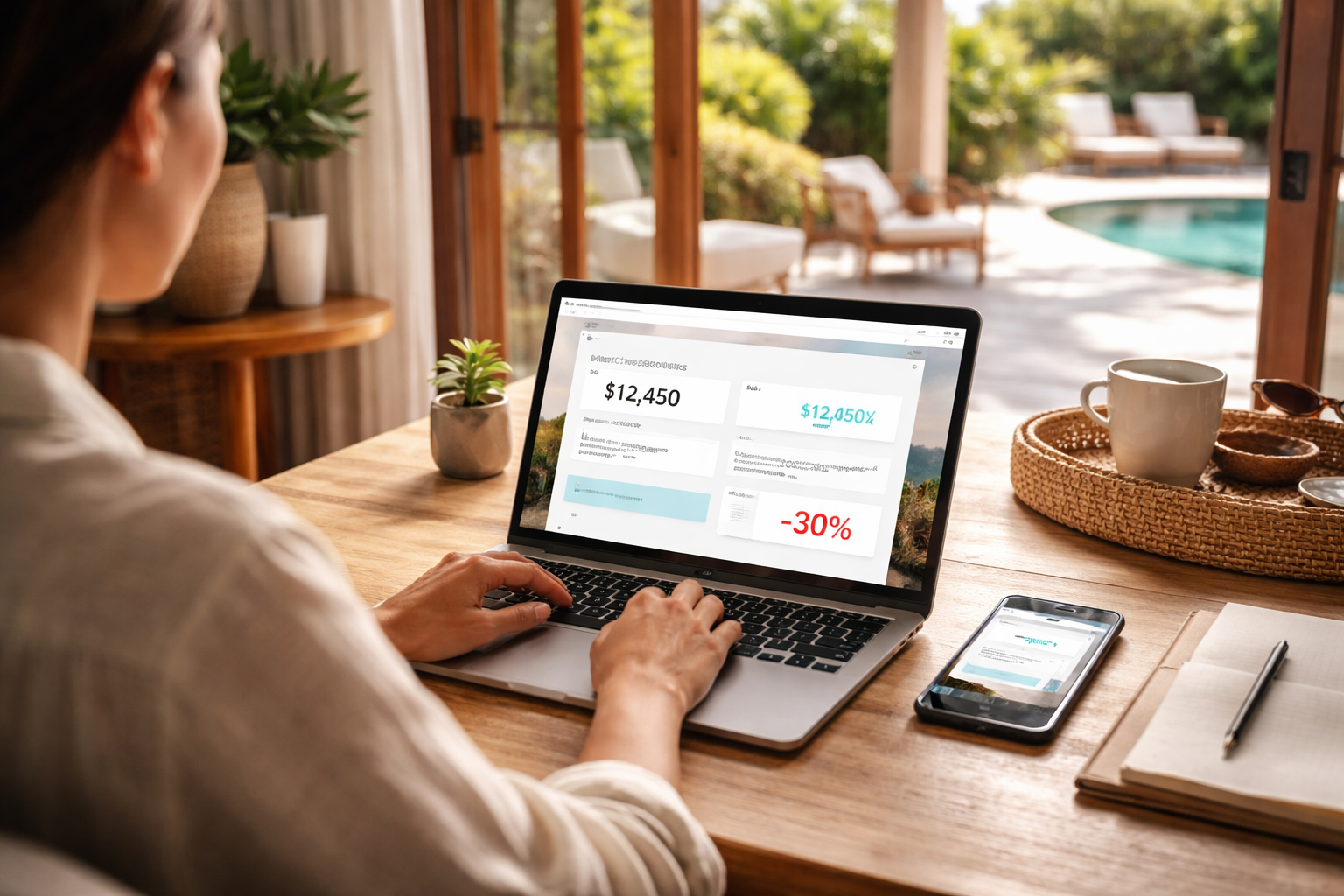
Say your homestay generates $6,000/month via OTAs.
- 15% commission = $900
- 10% discounting = $600
- Total “silent loss” = $1,500/month
That’s $18,000 per year—money that could go into upgrades, staff, or better marketing.
Operator takeaway: You don’t need to eliminate OTAs—you just need to stop paying unnecessary “growth tax” forever.
The Direct Booking Flywheel (what actually replaces OTA dependence)
Consistent direct bookings for homestays come from a simple but powerful flywheel. Each part strengthens the next.
1) Be findable (demand capture)
Show up where guests are already looking:
- Google Business Profile (photos, updates, reviews)
- Instagram + Reels (rooms, experiences, nearby spots)
- Maps + local SEO (consistent details, location pages)
- Partnerships (cafes, guides, planners)
This is where deeper guides—like optimizing Google Business Profile or building an Instagram system—fit in as execution layers.
2) Convert fast (frictionless inquiry-to-booking)
Conversion isn’t about design—it’s about clarity and speed.
A strong direct path usually looks like this:
- Guest discovers you
- They land on a page that quickly answers key questions
- They inquire via WhatsApp or check availability
- You respond quickly with clear options
- They pay a deposit
- They receive confirmation and details
Helpful tools: WhatsApp Business, a PMS/channel manager, simple payment links (Stripe/Razorpay/PayPal), or even basic templates to start.
3) Build trust (so guests feel safe booking direct)
Guests need reassurance when booking outside OTAs. Your setup should reduce doubt instantly.
- Real reviews (Google reviews work especially well)
- Clear policies
- Updated photos
- Human presence (host story, team)
- Fast communication
4) Retain and repeat (your profit engine)
OTAs won’t bring guests back—you have to.
- Collect guest details (with consent)
- Send a post-stay message + review request
- Offer return perks
- Share occasional updates or offers
What to change this week: a 7-day action plan to reduce OTA commissions
No complicated overhaul needed—just focused improvements.
Day 1: Audit your real OTA cost
Check your data:
- ADR
- Commissions
- Discount programs
- Cancellation rate
- Conversion rates
Goal: Understand your true cost.
Day 2: Create a direct “reason to book”
Focus on value, not just price:
- Flexible check-in
- Free breakfast or welcome drink
- Local experiences
- Better room allocation
- Faster support
Day 3: Fix your WhatsApp quoting system
Clarity and speed matter more than anything.
WhatsApp quote template (copy/paste):
Hi [Name], thanks for reaching out. For [Dates] (2 nights) we have:Option A: [Room/Villa name] – [Price per night] + taxes
Includes: [Breakfast / WiFi / parking / caretaker]Option B: [Alternate room] – [Price per night] + taxes
To confirm, you can pay a [X%] deposit here: [Payment link].
Want me to share a quick 30-sec room video as well?
Why it works: It’s simple, clear, and gives the guest an easy next step.
Day 4: Build one “money page” on your site
You don’t need dozens of pages—just one that converts well.
- Clear headline
- Top photos first
- Short experience highlights
- Strong CTA (WhatsApp or booking)
- Review snippets
- Location clarity
- Key policies
Day 5: Add proof to your Google Business Profile
- Upload recent photos
- Request reviews
- Reply to all reviews
- Add Q&A entries
Day 6: Start retargeting
- Install Meta Pixel
- Run simple retargeting ads
- Use short video creatives
Day 7: Put guardrails on OTAs
- Turn off underperforming discounts
- Avoid unnecessary last-minute price drops
- Set minimum stays during peak demand
- Move repeat guests to direct
Airbnb alternatives (what “alternatives” actually means for homestays)
Most people think “alternatives” means other platforms. In reality, the best alternative is owning your demand.
- Other OTAs: Booking.com, Agoda, Expedia, Vrbo
- Direct channels: Google, Instagram, referrals, email, WhatsApp
- Hybrid channels: Travel agents, corporate tie-ups, retreats
Operator recommendation: Keep 1–2 OTAs, but build at least one reliable direct channel you control.
Common mistakes that keep OTA dependence high
Making direct bookings harder
If direct booking takes longer than OTA booking, you’ll lose the guest.
Competing on price instead of value
Lower prices aren’t a long-term strategy. Better experience and clarity are.
Not capturing guest data
Without a guest list, you start from zero every month.
Trying to do everything at once
Focus on one channel first. Build it well. Then expand.
A realistic target: what “healthy” OTA mix looks like
- Early stage: 80–90% OTA
- Growth stage: 40–60% OTA / 40–60% direct
- Mature stage: 20–40% OTA
Key point: The goal isn’t zero OTAs—it’s control over pricing, policies, and revenue.
Closing: stop paying commission on the same guest twice
Left alone, OTA reliance tends to grow. But even a simple direct system starts to flip the equation—your best months begin feeding the next ones through reviews, repeat guests, and stronger visibility.
If you’re starting small, focus on three things: improve your WhatsApp responses, create one high-converting page, and strengthen your Google Business Profile. That alone can shift a meaningful share of bookings to direct.
Next steps for The Stay Playbook readers: Want a simpler way to convert more guest inquiries into confirmed bookings? Download Free Playbook – The Stay Playbook’s WhatsApp Booking Starter Kit — a practical collection of guest messaging templates, follow-up flows, and conversion-focused reply frameworks designed specifically for homestays, villas, and boutique stays. It’s one of the easiest ways to improve response quality, delight your guests, and reduce missed bookings.